Presentation of Surface Weather Observations

|
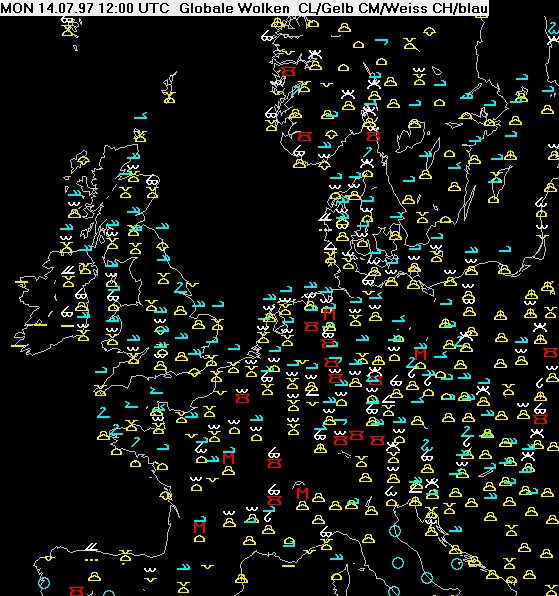
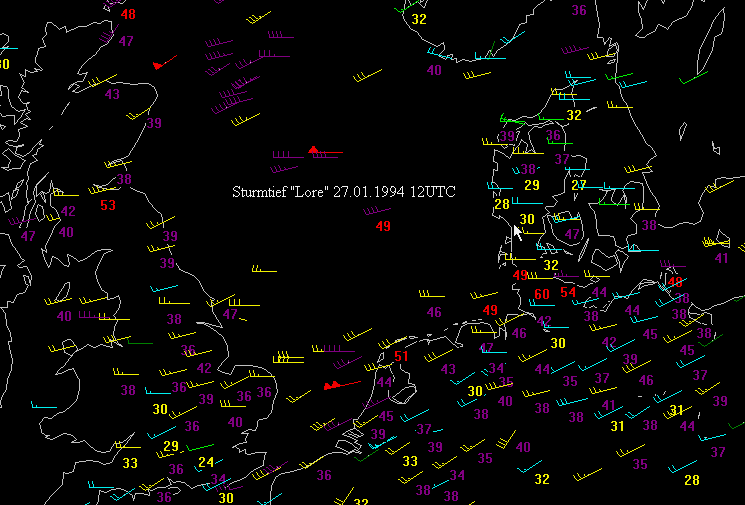
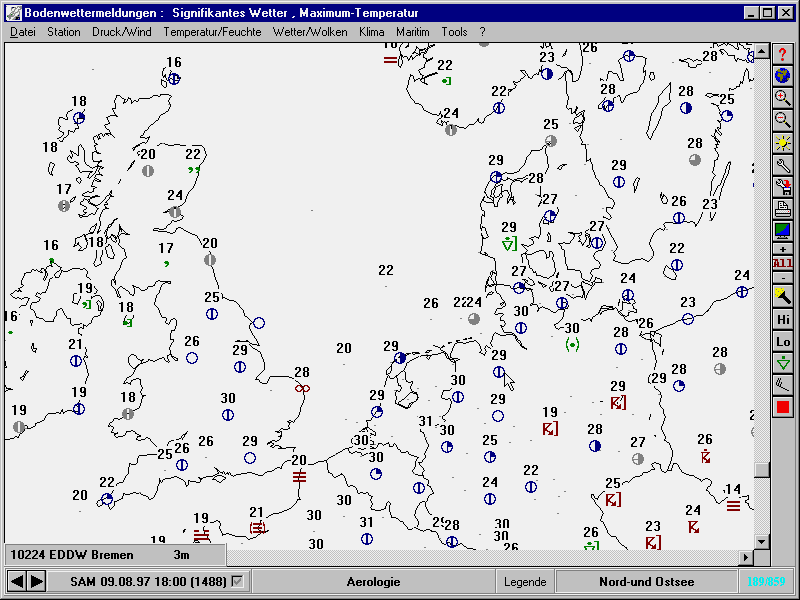
SYNOP is a program for geographical visualization
of surface weather observations.
Due to limitations of space available on a computer screen
observations are presented by selection of only one
or a few parameters:
Single-parameter presentation increases the amount of non-overlapping observations significantly. Nevertheless, non-overlapping presentation causes some stations to be hidden. Weather watch requirements sometimes make it necessary to accept a certain degree of overlapping in order to detect signifant weather phenomena. The possibility to change the degree of overlapping continuously offers the choice between clear and complete presentation.
|
||||||||
|
(Click picture for full size)
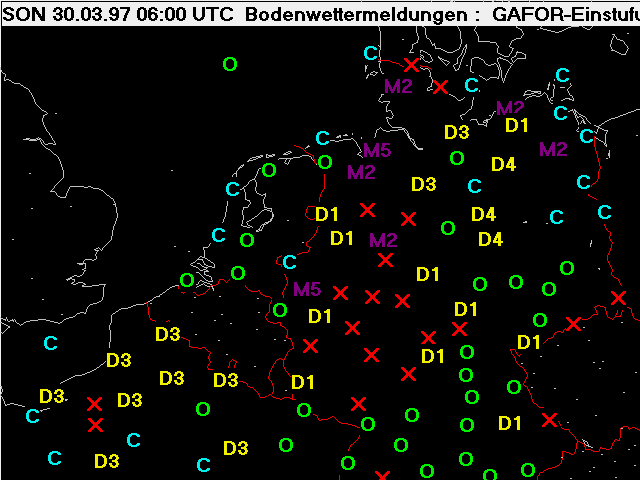
Apart from basic observations, deduced and problem-specific parameters can be visualized, e.g.
The Hitlist Hi / Lo function allows a special non-overlapping presentation in ascending / descending order. This prevents the suppression of significant stations by less significant stations. Sorted Hi, a ww=95 TS cannot be suppressed by a ww=51 drizzle, which could happen in unsorted presentation. These data are also shown in an alphanumeric list which can be saved as file or printed. |
||||||||